Chaser Story
From Austin to the Arctic
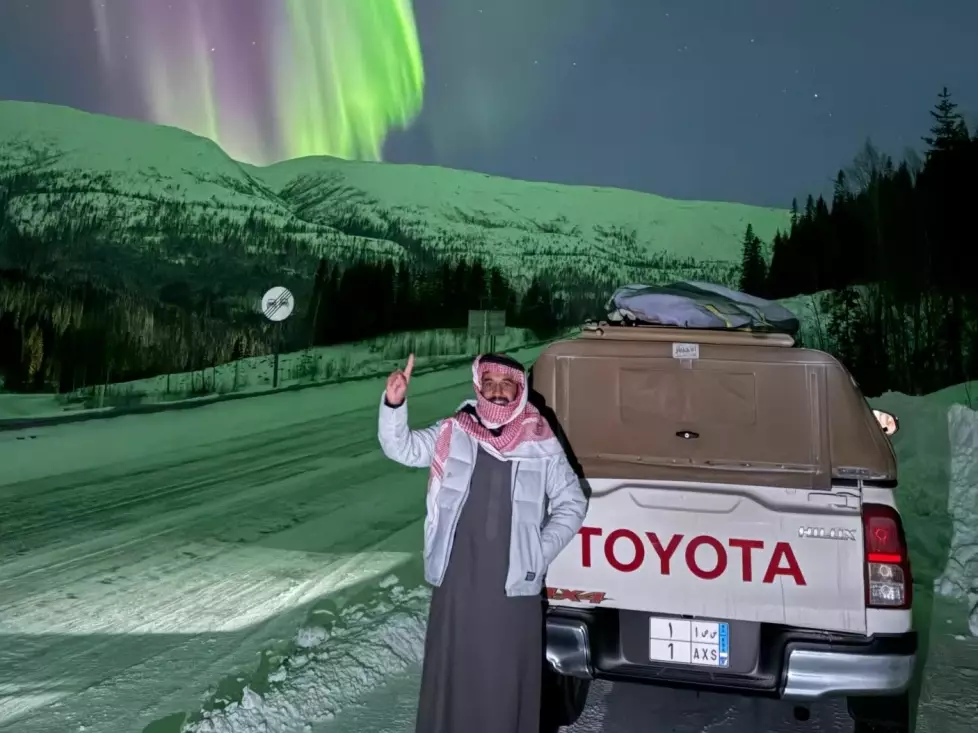
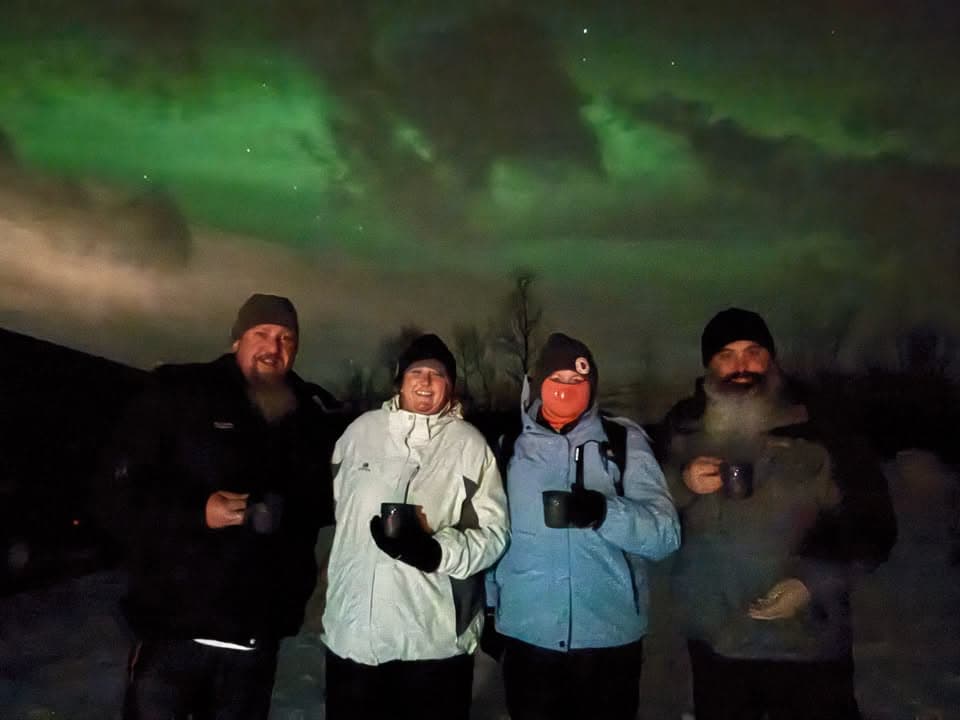
“Words cannot describe the experience. I was a proud husband who was able to check an item off my wife's bucket list.”
Source: NOAA Space Weather Prediction Center · Updated every 5 min
The KP index is the single most important number for predicting northern lights visibility. Here's what each level means for aurora chasers.
Aurora confined to high latitudes. Best seen in northern Norway, Iceland, and northern Canada.
Activity increasing. Visible from Tromsø, Fairbanks, and southern Iceland on clear nights.
Good aurora night. Potentially visible from Scotland, southern Scandinavia, and northern US states.
Geomagnetic storm in progress. Aurora may be seen across much of Northern Europe and North America.
From the Norwegian Arctic to the Alaskan interior — explore live aurora forecasts and local conditions for the world's top aurora destinations.
Arctic capital with year-round aurora season and fjord landscapes.
Europe's westernmost capital, surrounded by lava fields and geothermal hot springs.
One of the world's clearest skies sits inside this subarctic national park.
Right under the auroral oval — one of the best odds on the planet.
The Aurora Capital of North America, with 240+ aurora nights per year.
The world's northernmost settlement — polar night runs for four months.
Home to the world's oldest aurora observatory and the aurora museum.
Gateway to the famous Icehotel and deep inside the Swedish Lapland auroral zone.
PolarForecast pulls live data every 5 minutes from NOAA's Space Weather Prediction Center and NASA's ACE and DSCOVR satellites positioned at the L1 Lagrange point — giving 15–60 minutes of advance warning before solar wind reaches Earth.
Our 3-day outlook combines NOAA's forecast models with historical KP patterns to give you the best available probability for aurora activity at your chosen destination.
About our data sources →Real-time solar wind speed, density, Bz and Bt measurements from 1.5 million km upstream of Earth.
3-day geomagnetic storm probability forecasts updated every 5 minutes from the world's leading space weather agency.
Ground-based magnetometer network providing precise KP index readings based on 13 global observatories.
Combines solar cycle patterns and active region monitoring for longer-range aurora planning.
The KP index (planetary K-index) is a scale from 0 to 9 that measures global geomagnetic activity. A KP of 0 means very quiet conditions, while KP 9 represents an extreme geomagnetic storm. For aurora viewing, a KP of 3 or higher is generally needed at typical high-latitude destinations like Tromsø or Fairbanks. A KP of 5 or more can bring aurora to mid-latitude countries like Scotland or the northern United States.
The northern lights are visible whenever skies are dark and geomagnetic activity is present. The optimal window is September through March, when nights are long enough at aurora latitudes. The equinox months of September and March often see heightened geomagnetic activity, improving your odds. Avoid the summer months at high latitudes — the midnight sun keeps skies bright around the clock.
Short-range forecasts (1–3 hours) based on real-time ACE and DSCOVR satellite data are highly reliable. The 3-day outlook uses NOAA SWPC model data and is moderately accurate — useful for planning travel but subject to change. Beyond 7 days, aurora forecasting is inherently uncertain. PolarForecast updates data every 5 minutes from NOAA's Space Weather Prediction Center.
Bz is the north-south component of the interplanetary magnetic field (IMF). When Bz is negative (pointing south), it connects with Earth's northward-pointing magnetic field and opens a doorway for solar wind particles to pour into the magnetosphere — triggering aurora. A sustained Bz of −5 nT or lower significantly boosts aurora probability, and −20 nT or lower often produces vivid displays even at mid-latitudes.
Want to go deeper? Browse our aurora guides → or visit the Aurora Prediction Centre for full technical data.
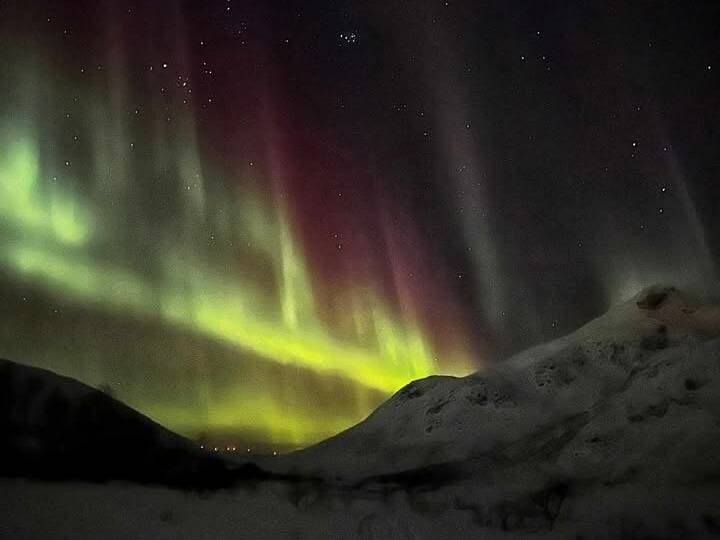
Photos from the field — real displays captured at high-latitude destinations.