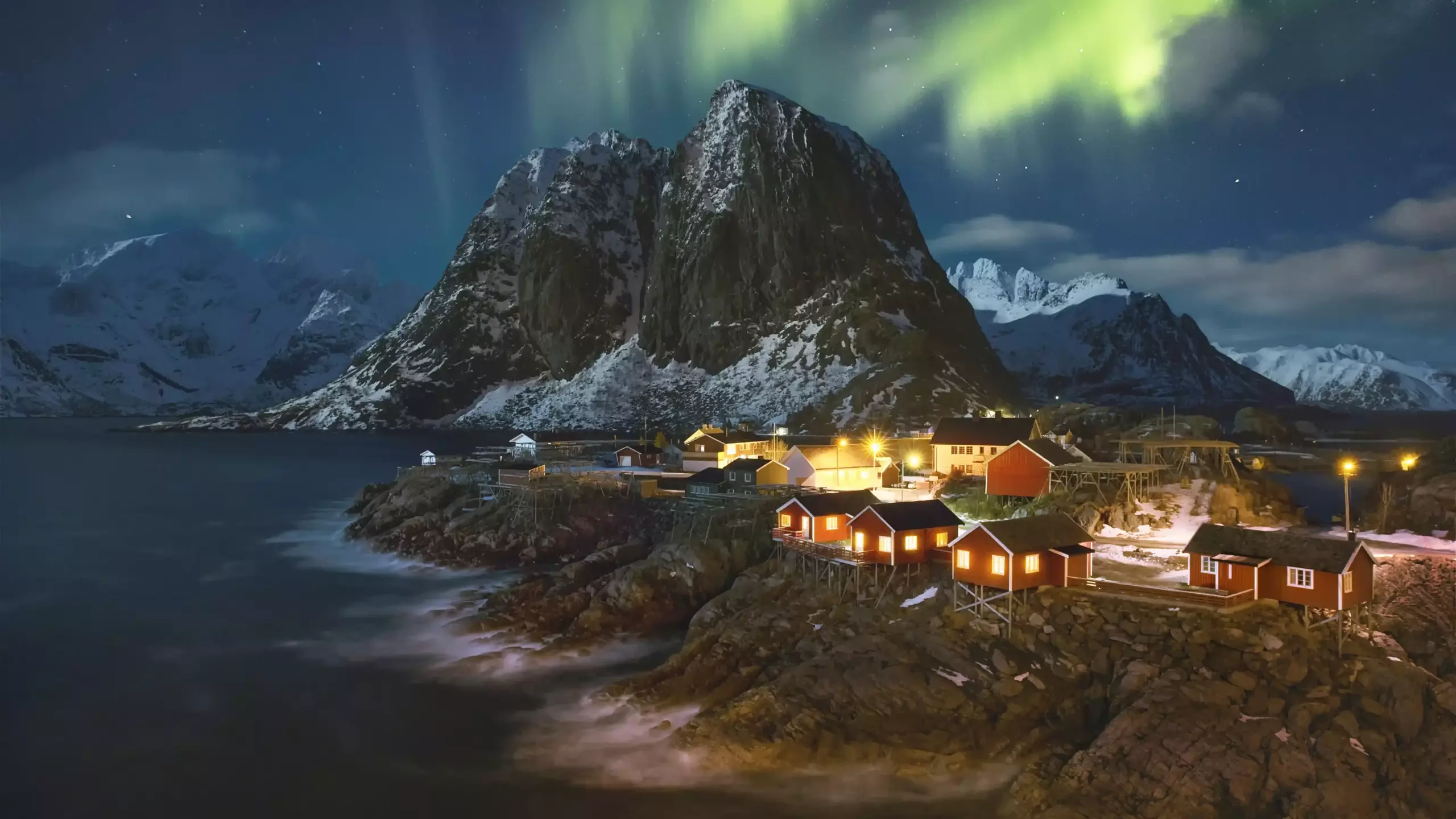
The Lofoten Islands produce some of the world's most photographed northern lights. Dramatic peaks rising from the Arctic Ocean, traditional red-painted rorbu fishing cabins, and mirror-calm fjords create a backdrop that transforms every aurora display into an otherworldly spectacle. At 68°N, Lofoten needs KP 2+ but rewards that threshold with extraordinary scenery.
Hamnøy and Reine are the photographer's classic spots — red cabins with mountain reflections. Å at the southern tip of the E10 road offers dramatic ocean views north. Flakstad beach and Ramberg beach face northwest with minimal light pollution. Rent a rorbu cabin and wait — cloud gaps can open rapidly here.
Frequently Asked Questions
Can you see northern lights in Lofoten?
Yes, and the scenery makes it exceptional. With KP 2 or higher, aurora is visible from the islands. The dramatic peaks, fishing villages, and fjord reflections make Lofoten one of the most photographically rewarding aurora destinations in the world.
What KP is needed in Lofoten?
KP 2+ for reliable viewing. At KP 3–4, expect vivid displays overhead. The islands' west-facing position can produce spectacular aurora over the open ocean.
When is the best time to visit Lofoten for aurora?
Late October through January for the darkest nights. November and January tend to have slightly better cloud statistics than December, which is the wettest month.
Is Lofoten good for aurora photography?
It's arguably the world's best aurora photography destination. Red rorbu cabins on stilts over the fjord, jagged peaks, and mirror-calm water create a backdrop found nowhere else on Earth.