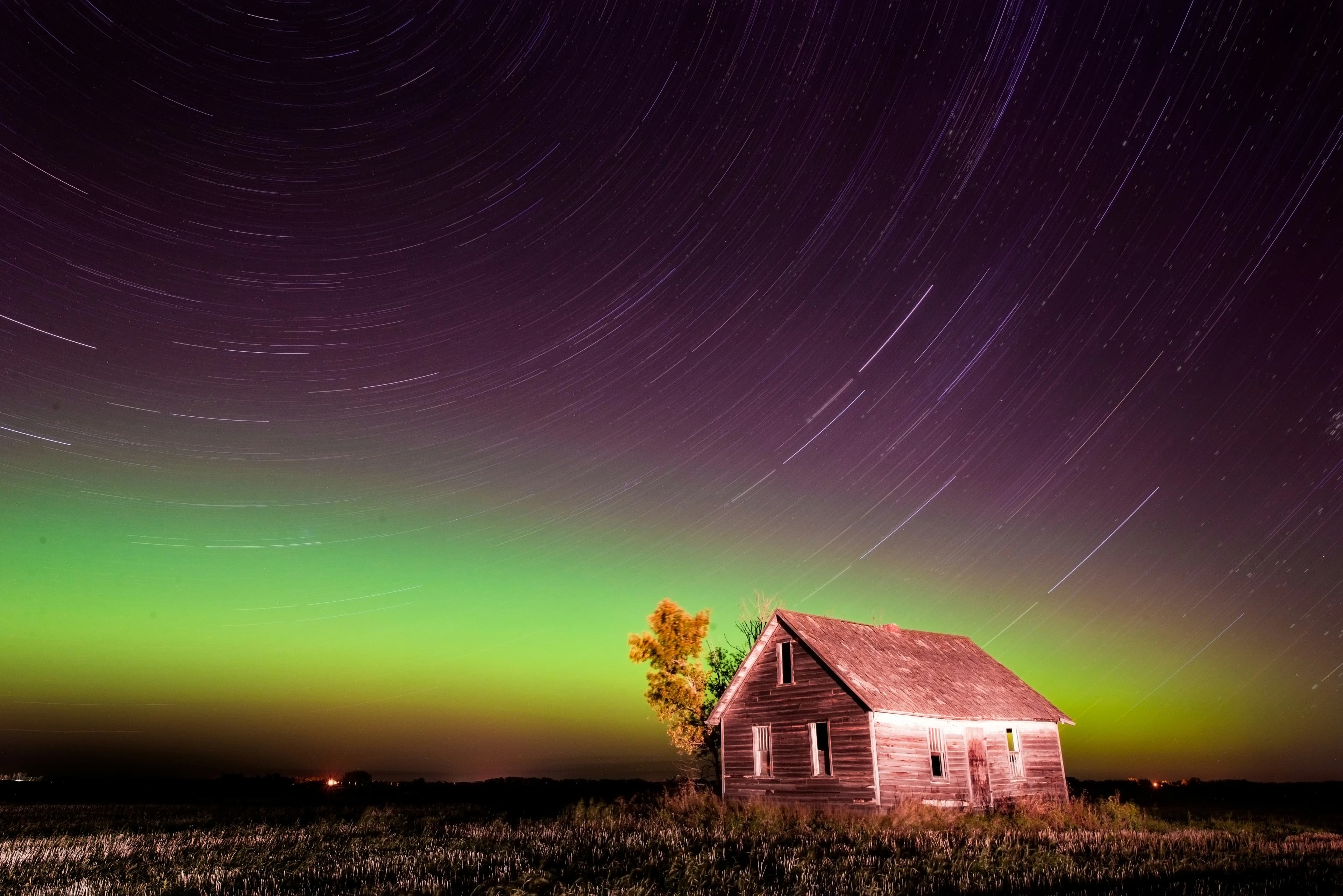
Both countries produce extraordinary aurora — and both will test your patience with clouds. Here's an honest comparison that doesn't pretend there's a simple answer.
This is the question we get almost daily during aurora season: Iceland or Norway? Both appear repeatedly in "best places to see aurora" lists, both have a healthy tourism industry built around the lights, and both will disappoint you with clouds at least some of the time. But they're fundamentally different experiences, and the right answer depends entirely on what you're after.
Aurora Potential: Similar, but Norway Has an Edge
Reykjavik sits at 64°N, roughly comparable to Tromsø's 69.6°N geographically, but Iceland's geomagnetic latitude is slightly lower than Norway's northern cities. In practical terms: both countries need KP 2–3 for reliable aurora at their main tourist destinations. Norway's far north — Tromsø, Alta, Longyearbyen — goes lower on the KP threshold and offers more nights where even modest solar activity produces vivid displays.
Iceland compensates somewhat by having the entire country in a reasonable aurora zone. You can see lights from the Reykjanes Peninsula, the Westfjords, the north coast near Akureyri, or the southern coast near Vík. Norway has a similar spread, but the best-performing destinations (Tromsø, Alta, Lofoten) are very far north and require additional domestic travel from Oslo.
Weather: Iceland Is Harder, More Variable
This is where many Iceland trips come unstuck. Reykjavik sits in the path of North Atlantic storm tracks with notoriously unpredictable weather — four seasons in one day is a cliché for good reason. Cloud cover is the dominant obstacle for aurora viewing in Iceland, and it's genuine and persistent. November and December are particularly difficult, with overcast skies for days at a time.
Norway's weather is variable too, but geography helps in unexpected ways. Alta, 100 km inland from the coast, has significantly better cloud statistics than coastal Tromsø. And Abisko in Sweden — easily reachable from Narvik by train — has its famous blue-hole microclimate that regularly stays clear when Norway is socked in. In Iceland, there's no equivalent of Abisko's reliable clear patch.
Accessibility: Iceland Wins Easily
Direct flights from North America and much of Europe land in Reykjavik. The aurora can be visible from the edge of the city. You can pick up a rental car at the airport, drive 20 minutes out, and be standing in a field under the lights the same evening you arrived. Iceland requires no domestic flight or overnight train — the entry point is the destination.
Norway's best aurora destinations require more planning. Oslo is well-connected internationally, but Tromsø involves an additional two-hour domestic flight (roughly €80–150 extra each way). Alta is a further 45 minutes. Lofoten requires either another flight or a stunning but time-consuming drive. For a long weekend trip from North America, Iceland is simpler and cheaper in total travel time.
The Landscape Factor
Aurora photographs don't look the same from both countries, and this matters if you're a photographer. Iceland gives you lava fields, geothermal steam, black sand beaches, waterfalls, and glaciers — geological drama that makes for unusual and striking aurora images. Vík's basalt sea stacks with aurora overhead, or a geothermal pool with lights reflected in hot water, are images you can't replicate in Norway.
Norway offers fjords, mountain reflections, traditional red fishing cabins (rorbu) in Lofoten, and the vast open white landscapes of Finnmark. Tromsø's island setting with mountains behind gives excellent backdrops. For the classic "aurora over snowy cabin" image, Norway is hard to beat. Neither country is less photogenic — they're just beautifully different.
Cost: They're Both Expensive, Norway Slightly More So
Both Iceland and Norway sit consistently near the top of global cost-of-living indexes. Accommodation, food, and tours are comparable — expect to pay €120–200/night for reasonable hotels, €40–60 for a decent restaurant dinner. Norway's additional domestic flights add cost. Iceland's car rental during aurora season (September–March) is competitive but basic cars aren't cheap.
Budget comparison for a 5-night trip from London: Iceland total (flights + accommodation + tours) around £1,200–1,800 per person. Norway to Tromsø typically £1,500–2,200 per person when you include the Oslo connection. The gap isn't dramatic, but it's real.
The Verdict: Depends on What You Value
- Choose Iceland if: you want maximum convenience, you're coming from North America, you want volcanic landscapes as foreground, or you're on a tight schedule.
- Choose Norway (Tromsø/Alta) if: you want the highest aurora probability and the widest KP range, you're willing to invest in planning, or you want the "classic" Arctic aurora experience.
- Choose Norway (Lofoten) if: you're a photographer wanting the most dramatic landscape + aurora combination.
- Choose Abisko (Sweden) if: you're primarily concerned with cloud-free skies and are flexible about reaching a less famous destination.
Frequently Asked Questions
Check the live Northern Lights forecast on PolarForecast — KP index, solar wind, cloud cover, and viewing probability updated in real time.
Check live forecast →