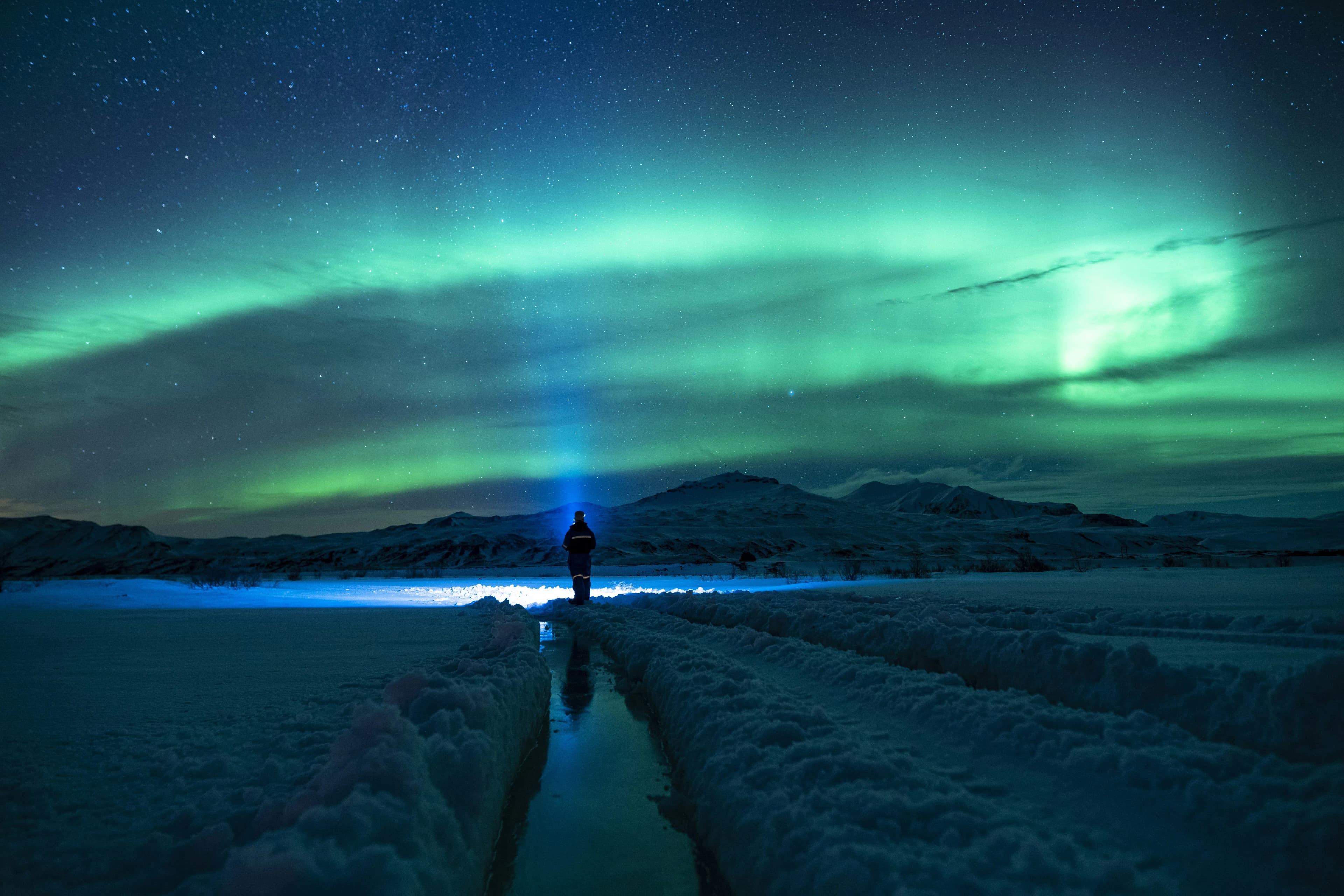
Tromsø is one of the world's top aurora destinations — but where you stand matters as much as when you go. Here are the five spots that consistently deliver.
If you've spent any time researching aurora travel, you've heard the name Tromsø. It sits at 69.6°N in northern Norway, deep inside the auroral oval, and on a clear night with even modest geomagnetic activity you can see the lights from practically anywhere in the city. But "anywhere" isn't "everywhere equally" — the difference between standing in a lit car park and finding the right spot on a dark fjord shore is the difference between a faint smear on the horizon and curtains of green filling the sky above you.
After talking to local guides and years of aurora data, here are the five spots in and around Tromsø that consistently outperform everything else.
1. Storsteinen — The Cable Car View
Fjellheisen cable car whisks you 421 metres above the city in just four minutes. From the Storsteinen viewpoint, the entire Tromsø island spreads below, ringed by fjords and mountains. There's almost no light pollution pointing upward — just the warm glow of the city below you, which actually makes for dramatic photography. The restaurant at the top stays open late in winter.
The downside: cable cars stop running at 11 PM (1 AM on Fridays and Saturdays), so you can't stay for a midnight display unless you hike back down. Worth checking the latest timetable before you go.
Book the last cable car up and plan to stay until closing. The sky darkens noticeably after 9 PM and the aurora often picks up after midnight, so time your trip to catch both.
2. Kvaløya Island — Open Sky, No Crowds
Fifteen minutes west of Tromsø city by car sits Kvaløya ("Whale Island"), and it's where many local guides take their groups on good nights. The road along the southern shore gives you long stretches of open ocean to the south and west, with mountains behind you blocking any city glow. Pull over almost anywhere along route 862 and you'll find a dark, quiet spot with a wide sky.
The best positions are around Tønsvik on the south-facing shore — the fjord is wide here and you get reflections on calm nights. In February the ice sometimes stretches out from shore, which creates a different and equally beautiful foreground.
3. Ersfjordbotn — The Classic Reflection Shot
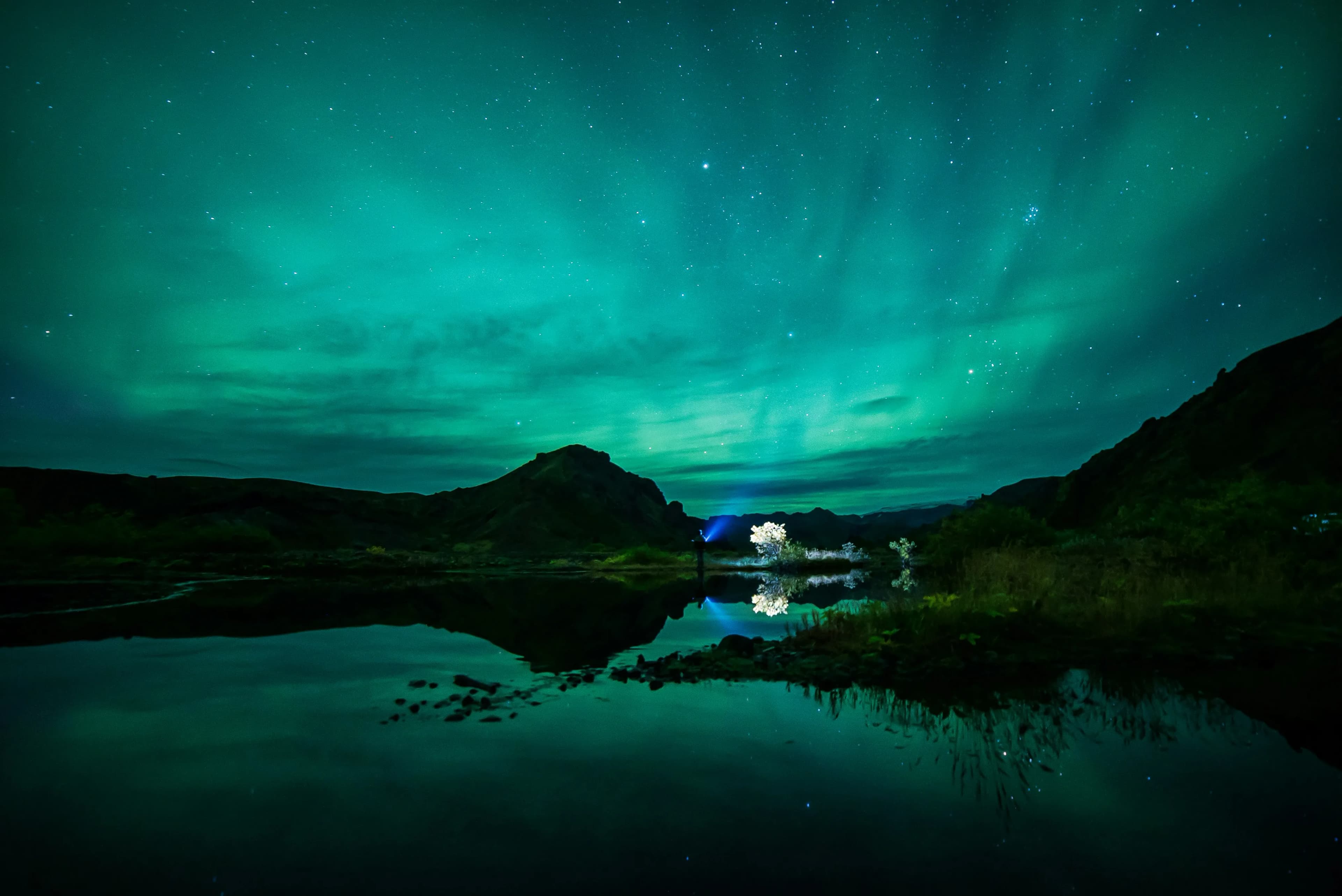
If you've seen a photo of Tromsø-area aurora reflected in a perfectly still fjord with mountains on both sides, it was probably taken at Ersfjordbotn. This small village sits at the inner end of Ersfjord, about 25 km from Tromsø. The sheltered position keeps the water calm even when it's windy elsewhere. On a good night, the aurora doubles in the reflection and the effect is extraordinary.
It's popular with photographers, so you'll rarely be alone, but the fjord is large enough that there's room to spread out. Go early to claim your position along the shore.
4. Lyngen Alps — The Serious Chaser's Choice
An hour and twenty minutes east of Tromsø, the Lyngen Alps rise sharply from the fjord to peaks over 1,800 metres. This is a different world — quieter, darker, and with a mountain backdrop that makes aurora photography look cinematic. The road along Lyngenfjord passes several excellent vantage points where the mountains reflect in the water.
The drive is worth it when conditions are good. The Lyngen peninsula also sits slightly further from Tromsø's light dome, making faint aurora more visible. If cloud cover is patchy, the mountains sometimes force weather systems up and over, leaving the fjord valley clearer than the coast.
The Lyngen Alps are a 1.5-hour drive on winter roads that can be icy and narrow. Rent a car with winter tyres, drive carefully, and never stop on the road itself — pull fully off the carriageway before looking up.
5. Tromsø Harbour — When You Don't Have Much Time
Sometimes the forecast goes active unexpectedly at 10 PM, you're back at your hotel, and you can't get a car or a tour. The harbour area — particularly the north end of the island near Telegrafbukta beach — gives you a clean northern horizon and open water without leaving the city. It's not optimal, but during a KP 4 or 5 event you'll see aurora clearly enough to be thrilled.
The bridge connecting Tromsø island to the mainland also offers good views both north and south. On a strong aurora night, local walkers and tourists congregate here naturally — it becomes a kind of impromptu gathering point.
Planning Your Night: Practical Tips
- Check the live KP forecast on PolarForecast before committing to a drive — if KP is below 2, the city centre may be enough.
- Cloud cover is your main enemy. Check a satellite cloud map, not just a weather app. Gaps often appear faster than apps predict.
- Dress for −10 to −20°C. Standing still in Arctic cold is much colder than the thermometer suggests.
- A wide-angle lens (16–24mm) and a tripod are all you need to get a decent aurora photo. Turn off image stabilisation on a tripod.
- The aurora moves fast. If you see it starting, don't wait — it often peaks within 20–30 minutes and fades before you've finished setting up.
Frequently Asked Questions
Check the live Northern Lights forecast on PolarForecast — KP index, solar wind, cloud cover, and viewing probability updated in real time.
Check live forecast →