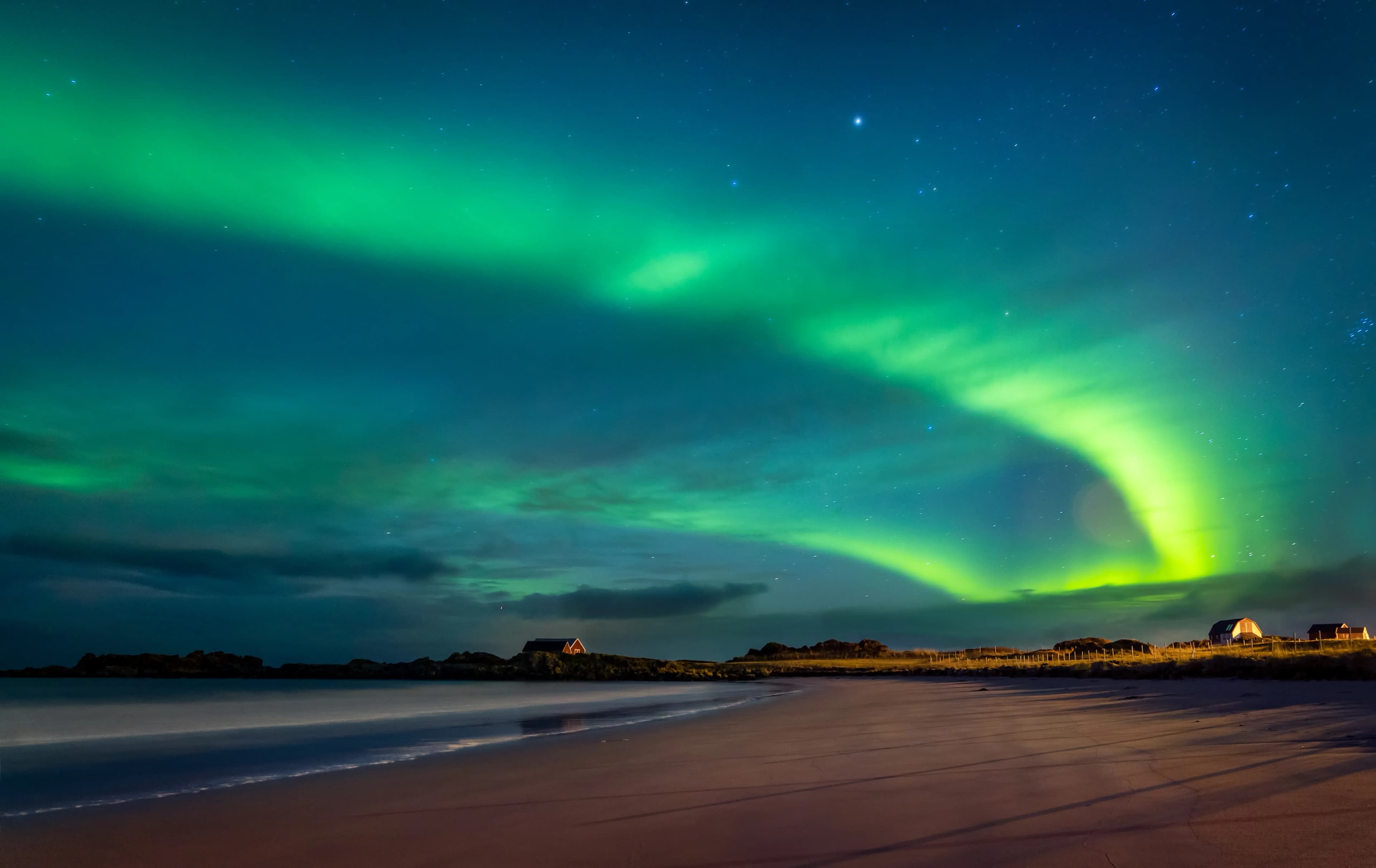
Northern lights don't respect the calendar, but the calendar definitely affects your chances. Here's how each month breaks down — honestly, including the trade-offs.
The most common question we hear at PolarForecast is "when should I go?" It sounds like a simple question, but the honest answer involves three separate factors that don't always align: geomagnetic activity (when the solar wind is most energetic), astronomical darkness (when the sky is dark enough to see aurora), and weather (when skies are clear enough to see through). Getting all three at once is the art of aurora chasing.
Let's go through the year honestly — including the months that look good on paper but frequently disappoint.
August — Darkness Returns, Quietly
From late August, the midnight sun has retreated enough that true astronomical darkness returns above the Arctic Circle. This surprises many people — there's a widespread assumption that aurora season starts in November or December. In reality, August 20 onwards produces dark skies in Tromsø, Abisko, and Fairbanks, and the first aurora displays of the season appear.
The advantages: temperatures are mild (0 to −5°C), snowfall is minimal, and the autumn colours of the birch forests make for spectacular photography. The disadvantages: nights are still relatively short (5–6 hours of darkness), and tourist season has wound down, meaning less accommodation and tour infrastructure.
September — The Equinox Window
September is underrated by aurora tourists, overrated by physicists. The autumn equinox effect — a genuine statistical increase in geomagnetic activity around September 23 — is real but modest. What's more significant is that nights are now 8–10 hours long, temperatures are still manageable, and cloud frequency hasn't yet hit its winter peak.
Late September produces some of the year's most accessible aurora experiences. The landscape looks stunning — snow above treeline but colour in the valleys — and you can watch aurora without having to endure serious cold. If you're aurora-curious but not committed to an Arctic expedition, September is the friendly entry point.
October — The First Choice for Many Chasers
October combines maximum dark-sky benefit from the equinox geomagnetic effect with genuinely long nights (10–14 hours of darkness at 69°N) and, crucially, before the worst of the winter cloud cover arrives. Many veteran chasers consider mid-October to early November the single best period of the year for combining all three factors.
Temperatures drop to −5 to −15°C — cold, but manageable with proper clothing. Snowfall creates photogenic landscapes without the driving hazards of deep winter. Alta and Abisko often report their first clear-sky aurora streaks of the season in mid-October that serve as a promising signal for the months ahead.
November — Deep Darkness, More Cloud
Polar night arrives in Tromsø on November 27 and in Alta a few days earlier. From this point, the sun doesn't rise at all — the sky goes through a brief twilight around noon, then back to darkness. Aurora is theoretically possible all day long. The psychological experience of polar night is profound and strange.
The practical challenge: November through December is statistically the cloudiest period at many Arctic locations. The Norwegian coast is particularly affected by Atlantic low-pressure systems. Abisko's blue-hole microclimate becomes more valuable here — while Tromsø disappears under cloud, Abisko can remain clear.
November is when real flexibility pays off. If you can chase cloud-free windows by moving between locations — Abisko when Norway is clouded, Tromsø when Sweden is blocked — your success rate rises dramatically. A flexible train or plane ticket and short booking windows help here.
December & January — Coldest and Darkest
The winter solstice delivers the shortest days and longest polar night. Aurora can be visible from 3 PM to 10 AM the following morning with no interruption from twilight. This sounds ideal — and the display potential is genuinely extraordinary. A major aurora event in January over a snow-covered landscape is one of the most spectacular natural experiences possible.
But the cold is serious. Tromsø averages −5 to −10°C, Alta −15 to −20°C, and Abisko can reach −25°C or lower on clear nights. Every piece of equipment needs to be cold-rated: camera batteries die, phone screens stop responding, and condensation can damage gear when you bring it back inside. This is not the time to be casual about preparation.
February — The Balanced Month
February is consistently the month that experienced chasers recommend most often, and the logic is sound. Polar night is ending — in Tromsø the sun returns on January 21 — but nights are still 16–18 hours long. Temperatures are often at their coldest, paradoxically making skies more stable and clear. Geomagnetic activity gets a boost from the spring equinox effect beginning to warm up.
The tourism infrastructure also operates at full capacity through February — tours run, accommodation is open, and you're not in the thin end-of-season period where things start to close.
March — The Spring Equinox Surge
March offers a second equinox window, often stronger than September's in terms of geomagnetic statistics. Night lengths are still respectable (10–12 hours). Weather begins to improve as winter high-pressure blocks become more frequent. Temperatures moderate slightly — still cold, but the brutal January cold is behind you.
The trade-off: some destinations start to see more daylight. By late March, Tromsø has 14 hours of light. Aurora is still visible on dark clear nights, but the window is shortening. March is an excellent month to travel if February is booked out or expensive.
April through July — Off Season
By April, twilight is returning to Arctic latitudes and the aurora season winds down. By mid-May, the midnight sun begins, and no amount of aurora activity produces visible lights — the sky simply never gets dark enough. Aurora still occurs throughout summer; it's just invisible to the naked eye. The season doesn't restart until late August.
Frequently Asked Questions
Check the live Northern Lights forecast on PolarForecast — KP index, solar wind, cloud cover, and viewing probability updated in real time.
Check live forecast →